The Relationship of Climate Change and Biodiversity

The Relationship of Climate Change and Biodiversity

November 10, 2025
By Socheata Chun
3 mins
2 Views

The Earth’s story is one of balance, an intricate web of life woven through time, climate, and evolution. Yet, in recent centuries, this balance has been tested as human influence reshapes natural systems faster than they can adapt. Among the greatest challenges of our time stands the relationship between climate change and biodiversity, two forces deeply intertwined. Understanding how they affect one another is essential if humanity is to protect the living world that sustains us all.


The vast circle of life on Earth has been interconnected to balance ecosystems where plants, animals, and organisms offer each other food and energy within the adaptive weather and landscape. Though climate change refers to long-term shifts in temperatures and weather patterns, according to the United Nations, this circle has been disrupted and broken through human activities which result in the current concern of global warming. We, humans in the industrial era, are burning fossil fuels which release greenhouse gases (CO2, CH4, N2O, CFCs) to the atmosphere, trapping the heat in the surface of the Earth and making a warmer temperature. In the recent report, IPCC, 2018: Global Warming of 1.5oC, the temperature rose to 1.5oC warmer and It is estimated to be 2oC or higher to 5oC by 2100 if the current trend continues. In the meantime, “In 2024, the Earth’s average temperature was reportedly 1.5°C warmer than in pre-industrial times.” UNEP, 2025, Emissions Gap Report.

Biodiversity Loss in the Climate Change Circulation
When the Earth temperature rises higher and warmer the whole ecosystem in which biodiversity plays a key role in its balance is also changed. “Biodiversity is the variety of life on Earth, in all its forms, from genes and bacteria to entire ecosystems such as forests or coral reefs.”, UNEP: Biodiversity-Our Strongest Natural Defense Against Climate Change. The rapid loss of biodiversity sits inside the climate change circle like a shrinking island in a rising tide. Each degree of warming negatively impacts not just the single part of any living thing, seriously, it affects the chain of life in the ecosystem and breaks down the completed puzzle of the ecosystem. Therefore, the threads snap faster than they can be rewoven.
e03823_64517065aff84d7fa9f24bab4a79d5bd~mv2.avif
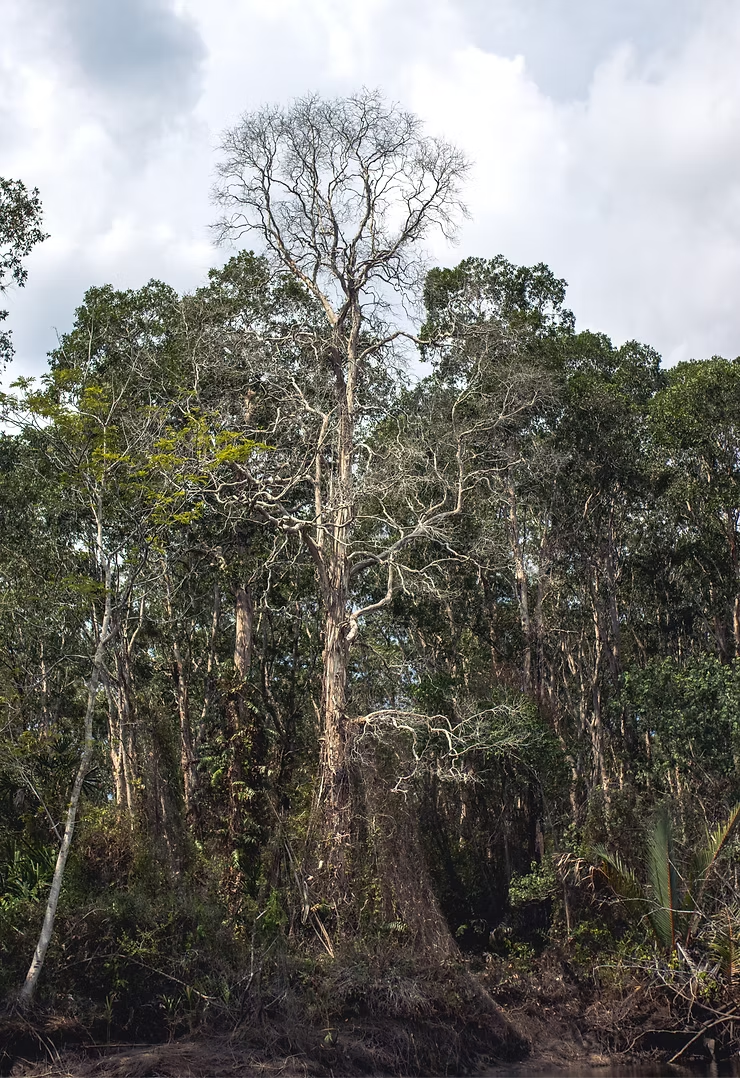
When species disappear, nature loses its superpowers.

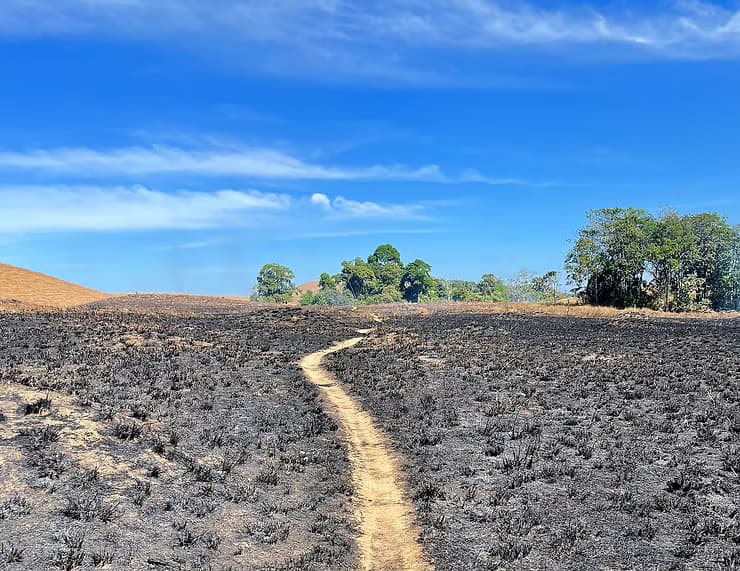
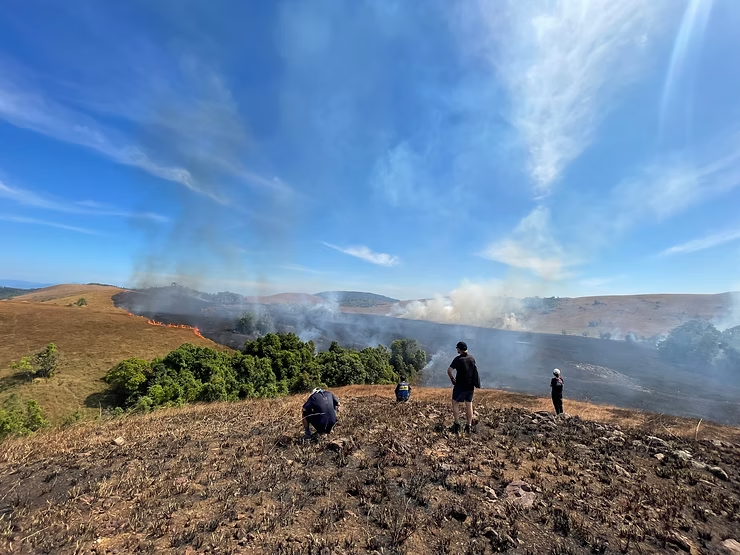
The danger grows because biodiversity and climate are partners in a delicate dance. Rich ecosystems store carbon, cool landscapes, and balance water cycles. But when species disappear, nature loses its superpowers. Forests capture less carbon. Wetlands filter less water. Grasslands become brittle and burn more easily. This weakness then feeds more warming, which causes more loss, spinning the circle faster, tighter, and harsher.

Can We Break Through this Harmful Circle?
e03823_71b08b99559545ef8a1ca4bca98a7632~mv2.avif
To break the circle, we need to give nature space to breathe again.

To break the circle, we need to give nature space to breathe again. Protect forests before the last old giants fall. Remaining the rising temperature below 2oC should be achieved in the next decades. This action needs all the stakeholders from policy makers, communities and each individual to join in and respect the climate actions. Protecting and restoring mangroves that guard coasts, wetlands that filter more water and forests that store more carbons with foods and shelters need to be in action. Each step of our sustainable living practice such as agro-ecology that keeps soil and biodiversity alive, using clean energy that keeps the air clean without increasing GHGs, and promoting indigenous culture can take part in climate change mitigation.


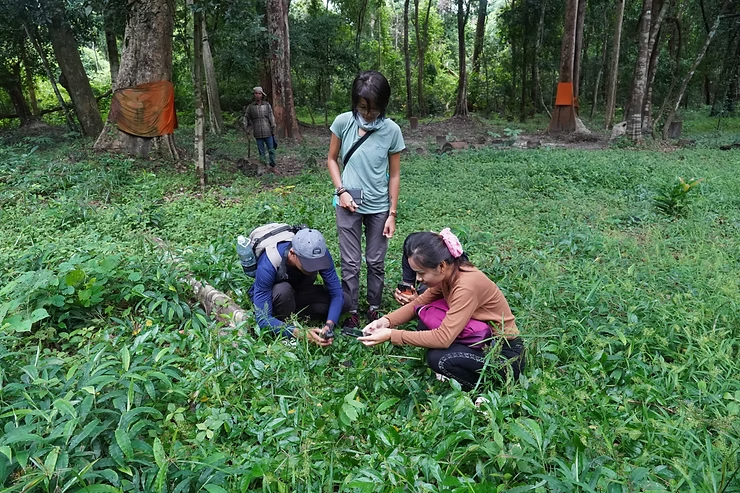
The potential initiative starts from empowering young people and youth to be aware of the crisis and take part in the policy making which positively impacts their generation and the future. Through education with nature-connection and appreciation, young people can be transformed with empathy and compassion for all the living diversities that support each other's harmony and peace of life.
e03823_c1ab6d3dd23e4315b3a15ea6ec6dbf5e~mv2.avif
Through education with nature-connection and appreciation, young people can be transformed with empathy and compassion for all the living diversities that support each other's harmony and peace of life.

Biodiversity as The Earth Survivor
In the climate change circle, biodiversity is both the first to be hurt and the key to calming the storm. Without its full choir of species, the world grows quieter, poorer, and far more fragile. With it, the planet has a full potential to heal and survive and that keeps us alive.


The relationship between climate change and biodiversity is not a distant or abstract issue, it is the pulse of life on Earth. Every species lost weakens the planet’s resilience, and every tree, reef, or wetland protected strengthens its chance to endure. The path forward lies in collaboration, compassion, and reconnection with the living world that shelters us.

Socheata Chun

Author

Socheata Chun

Socheata Chun Having a passion for outdoor learning, Socheata Chun graduated from the Training of Trainer program at YEP Academy, which supports her simple living lifestyle of protecting and respecting natural diversities.

Related Articles

Making Space for the Wild in Southeast Asia

Making Space for the Wild in Southeast Asia

Nature is imperfect. That is part of what makes it so beautiful. It is wild, messy, and not neatly organised. That is what makes it so alive. There is a quiet kind of magic in this wilderness, yet many of us are slowly becoming less familiar with it.

Annie Kukreja4 mins mins
Nature Praxis: Understanding the Essentials of Ecotherapy

Nature Praxis: Understanding the Essentials of Ecotherapy

What if better mental and physical health could be found not in the next downloadable app, the next hack, or the next Instagram post, but in something very simple: going outside and remembering that you are part of the living world?

Dirk Reber6 mins
Grounding in Nature When Things Feel Overwhelming

Grounding in Nature When Things Feel Overwhelming

Entering nature does not always happen from a place of calm. Often, it happens during moments of overwhelm, when thoughts race, when the chest feels tight, or the body becomes numb or disconnected. In times of uncertainty, loss, or sudden change, emotions can be difficult to name, like a river mixed with mud where the water turns unclear. The mind feels crowded, the nervous system overstimulated, and what becomes clear is the need for space where something steady to hold a body and mind under strain.

Huy Ing Lay5 mins
What to Reflect About as the Year Is Ending?

What to Reflect About as the Year Is Ending?

The year rolled by so fast, suddenly it’s December, the last stretch of 2025. And I know that if I don’t pause and sit with myself, I’ll just keep moving without really understanding what has been happening inside me. So maybe this is the moment to stop for a while. To breathe. To look inwards. And if you want, I invite you to do the same. It can feel overwhelming to think about an entire year. Honestly, who has the energy for that? But maybe reflection isn’t about reviewing everything. Sometimes it’s simply giving yourself a quiet moment to notice what stayed with you, what shaped you, and what softened or hardened in you without you fully noticing. Because so much of what changes us doesn’t happen loudly. It happens in small shifts, quiet undercurrents, the subtle ways we respond to life. As the year moves into its last month, return to yourself gently, maybe to sit under a tree, maybe by a window where the light feels kind, or lying on your bed when everything is finally quiet. Let these questions rise slowly, without trying to force an answer. Where did I grow, even if no one else saw it? Not all growth becomes a big moment. Sometimes it’s the slow dissolving of an old fear. The way you didn’t abandon yourself this time. The decision to rest, to walk away, or to speak a truth that felt too heavy in your mouth. Growth can be private. Quiet. Invisible to anyone but you. What did I carry that was heavier than I realized? This year placed things in your hands you didn’t ask for and that can be expectations, disappointments, unspoken sadness, pressure to keep going. Some of these things don’t need to follow you into next year. Some of them deserve to finally be put down. What moments touched something real in me? Maybe a conversation that lingered. A walk in the forest that felt like a breath. A connection that scared you because it woke something inside you. A sunrise or sunset that reminded you of something you didn’t know you missed. These moments are anchors. Let them speak. Let them stay with you. And as you reflect, be honest but kind with yourself. Notice where you could have been gentler, clearer, more courageous and then meet that honesty with compassion. Reflection isn’t about judging yourself. It’s about listening to the truth of your own experience. Some memories might be uncomfortable. Some stories may feel unfinished. There’s wisdom hidden inside the things we avoid, inside the parts of ourselves we are still slowly learning to love. In this gentle looking back, you may find a soft clarity about what you’re ready to carry forward and what you’re finally ready to release.

Huy Ing Lay2 mins
Share: